Storm Damage Tree Removal in Baltimore What to Do When a Tree Falls on Your Property
Quick Answer
If a storm has damaged a tree on your Baltimore property, you — not the city — are responsible for cleanup under Maryland law, regardless of which direction the tree fell. Document everything with photos before any work begins, then call a licensed tree service for storm damage cleanup and an emergency assessment. A-1 Tree & Mulch holds Maryland Licensed Tree Expert #552 and owns its own crane and bucket truck for 24/7 response. Call or text 443-831-1280 for a free on-site estimate.
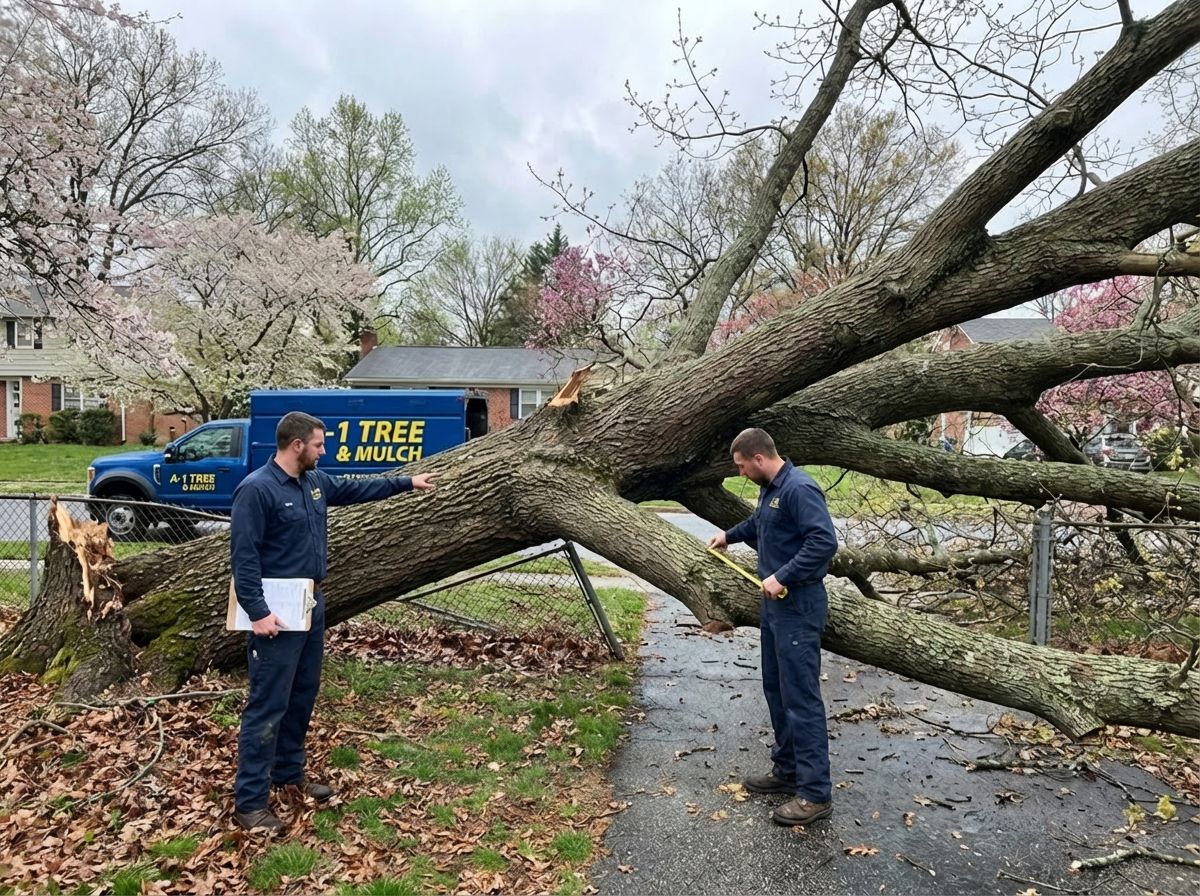
It happens faster than you expect. One hour the tree is standing, the next it's across your fence, blocking your driveway, or — in the worst case — through your roof. If you're a homeowner in Towson, Cockeysville, Parkville, or anywhere in Baltimore County, you've probably heard the wind pick up in the middle of the night and wondered whether to check the backyard in the morning.
When a storm brings a tree down on your property, there's a specific order of things to do — and a few things you should absolutely not do first. This guide walks through all of it, including who's responsible for the cost (Maryland law has a clear answer), how to document the damage for your insurance company, and what to look for in a storm damage tree removal crew that can actually show up when you call.
Who Is Responsible When a Tree Falls in Baltimore?
This is the question homeowners ask first, and the answer is straightforward under Maryland law: the property owner is responsible for tree cleanup on their own land — regardless of which direction the tree fell or who it originally belonged to.
If a neighbor's tree falls onto your property during a storm,
you are responsible for removing it from your side. If your tree falls onto your neighbor's property,
they
are responsible for removal from their side. Acts of God — meaning storms, high winds, and weather events no one could reasonably prevent — break the chain of liability in most cases.
There are exceptions. If a neighbor's tree was visibly dead, diseased, or leaning dangerously and you notified them in writing before it fell, you may have grounds for a liability claim. That's a conversation for an attorney. But for the purposes of getting a tree off your property quickly and safely, the practical answer is: call a tree service and document everything for your insurance company first.
Baltimore County and Baltimore City have different rules for street trees and right-of-way trees. Those are handled through the city or county — not by a private tree service. If a public tree came down onto your private property, contact Baltimore City's Bureau of Parks and Arboriculture or Baltimore County's Department of Public Works before hiring anyone. More on permits below.
Immediate Steps After Storm Tree Damage
The order of operations matters. Doing things out of sequence can cost you money on the insurance claim and create safety problems that wouldn't have existed if you'd waited an hour.
1. Stay back until the scene is stable.
Don't walk under a tree that's partially suspended or leaning on a structure. Widow-makers — branches held up by other branches or roof sections — can drop without warning. Give the site a wide berth until a trained eye has assessed it.
2. Check for downed power lines before anything else.
If a power line is down or in contact with the tree, do not approach. Call BGE at 1-800-685-0123 and 911. A tree removal crew cannot work safely near live lines — the utility company has to clear the hazard first. This is not optional.
3. Photograph everything before any work begins.
Walk the perimeter of the damage with your phone. Photograph the tree, the direction it fell, points of contact with any structure, fence, or vehicle, and any visible damage to property. Your insurance adjuster will ask for documentation. Getting photos after cleanup is completed makes the claim significantly harder to support.
4. Call your homeowner's insurance company.
Report the damage before any removal begins. Most policies cover storm-related tree removal when the tree is on or near a structure — but the claim process typically requires a damage assessment and documentation. The Maryland Insurance Administration (insurance.maryland.gov) is the state resource for understanding your coverage rights.
5. Call a licensed tree service for an assessment.
A qualified crew can tell you what's safe to address immediately versus what needs to wait, and can provide a written assessment for your insurance company. A-1 Tree & Mulch provides free on-site estimates and written documentation — call or text 443-831-1280.
For a tree creating an immediate hazard, request
emergency tree removal in Baltimore. A-1 takes emergency tree and crane calls 24/7/365 and responds the same day; on-site service timing depends on conditions.
When to Call a Tree Service vs. When to Call 911
Not every storm tree situation is the same. Here's a fast breakdown:
Call 911 if:
- Power lines are down or in contact with any structure or the tree
- Anyone is injured or trapped
- There is a gas leak or fire risk
- A tree has compromised your roof structure and the home is not safe to occupy
Call a licensed tree service if:
- A tree has fallen onto your fence, driveway, lawn, or detached structure
- Limbs are on the roof but no structural penetration or active safety threat
- A storm-weakened tree is still standing but visibly compromised
- You need a written assessment for an insurance claim
- Cleanup needs to happen before emergency services can safely access an area
The overlap: if there's any doubt about whether a hazard is life-threatening, call 911 first and the tree service second. A legitimate tree service will tell you the same thing.
What Happens on the Job — Storm Damage Tree Removal, Start to Finish
Most homeowners have never had a tree removed before, let alone one that came down in a storm. Knowing what the crew actually does when they pull up to your property takes the uncertainty out of it.
1. Site assessment before any cutting starts.
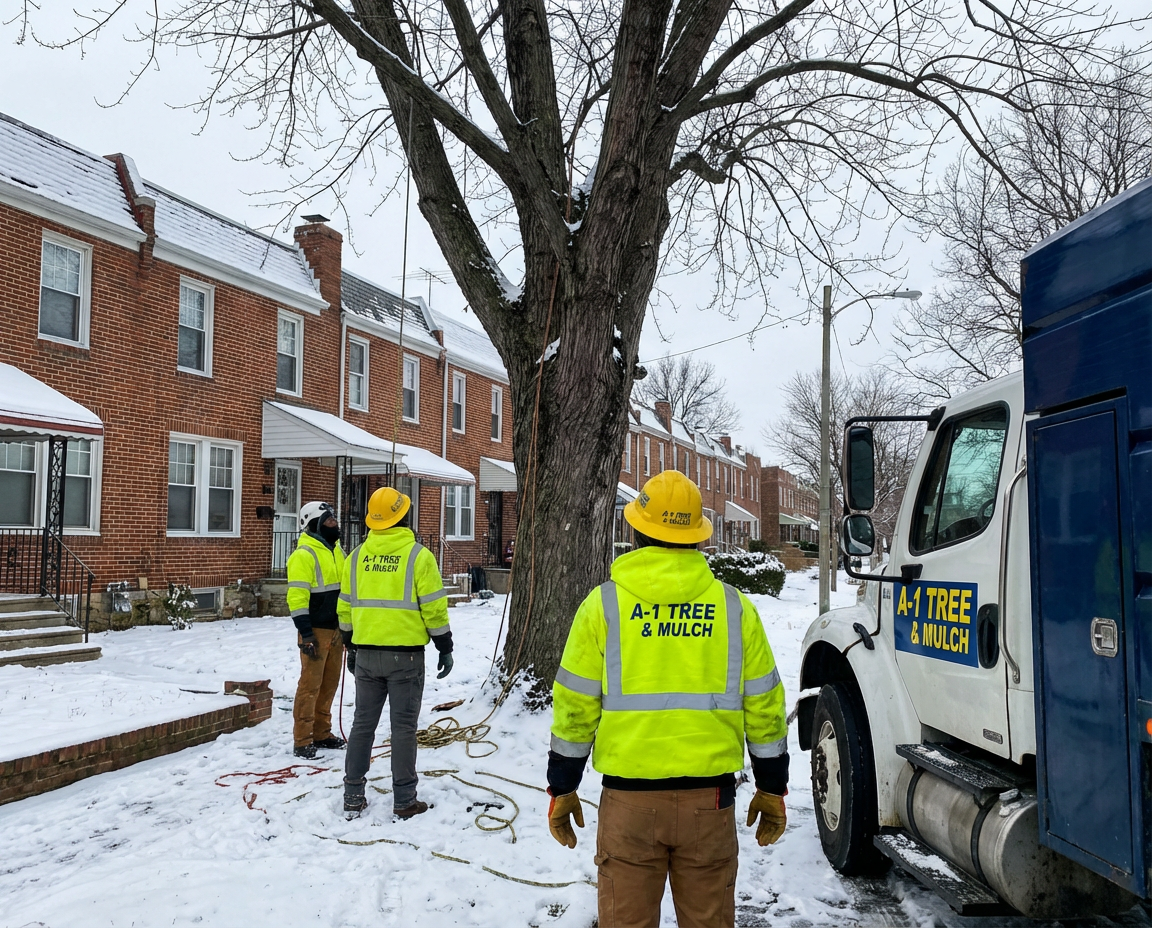
The crew walks the site first. They’re looking at how the tree fell, what it’s in contact with, whether any part of it is under tension, and what equipment the job actually requires. A tree suspended between your roof and the ground is not the same job as a tree flat on the lawn. Calling it before cutting is what prevents secondary damage.
2. Equipment staging and access.
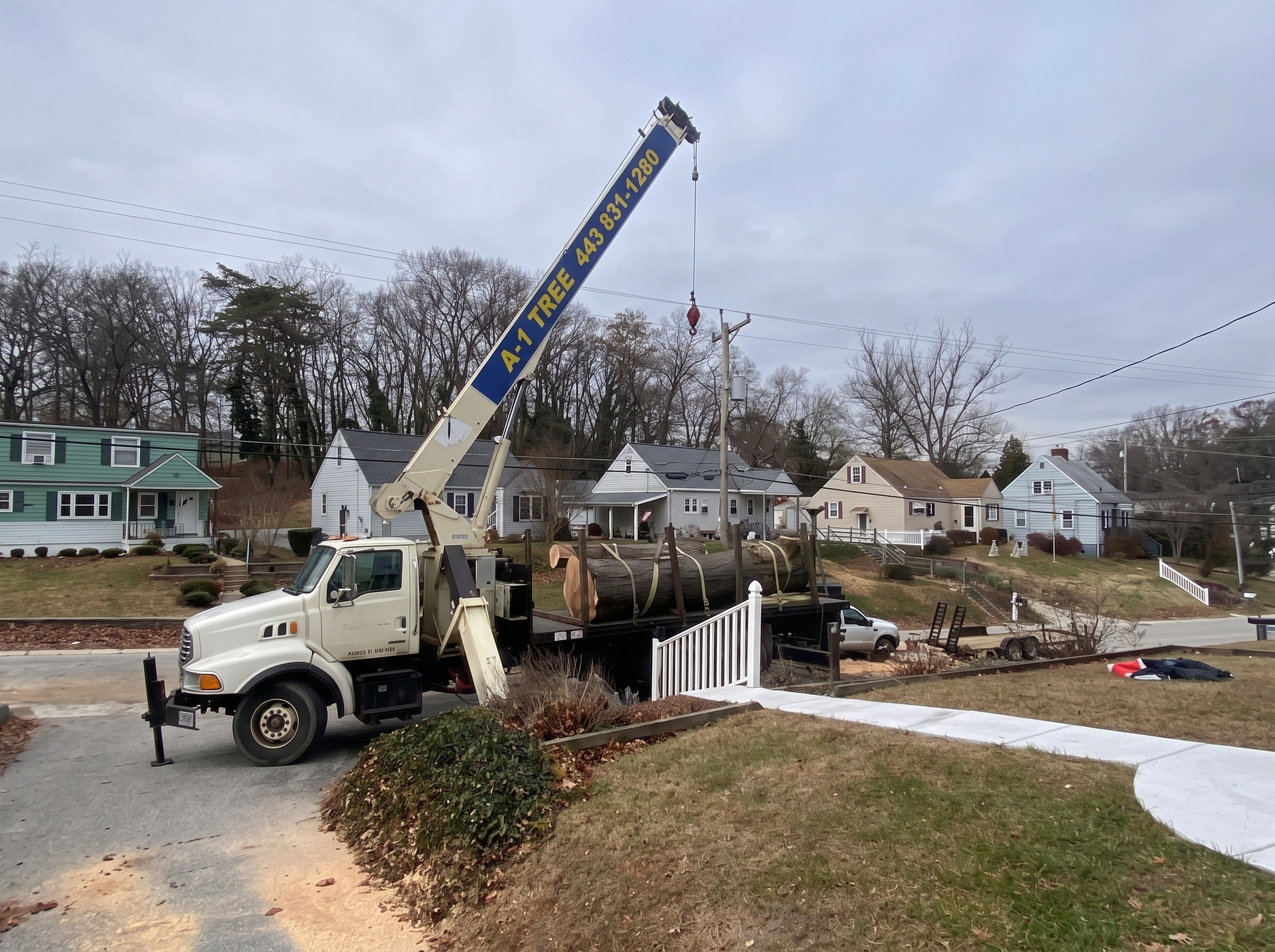
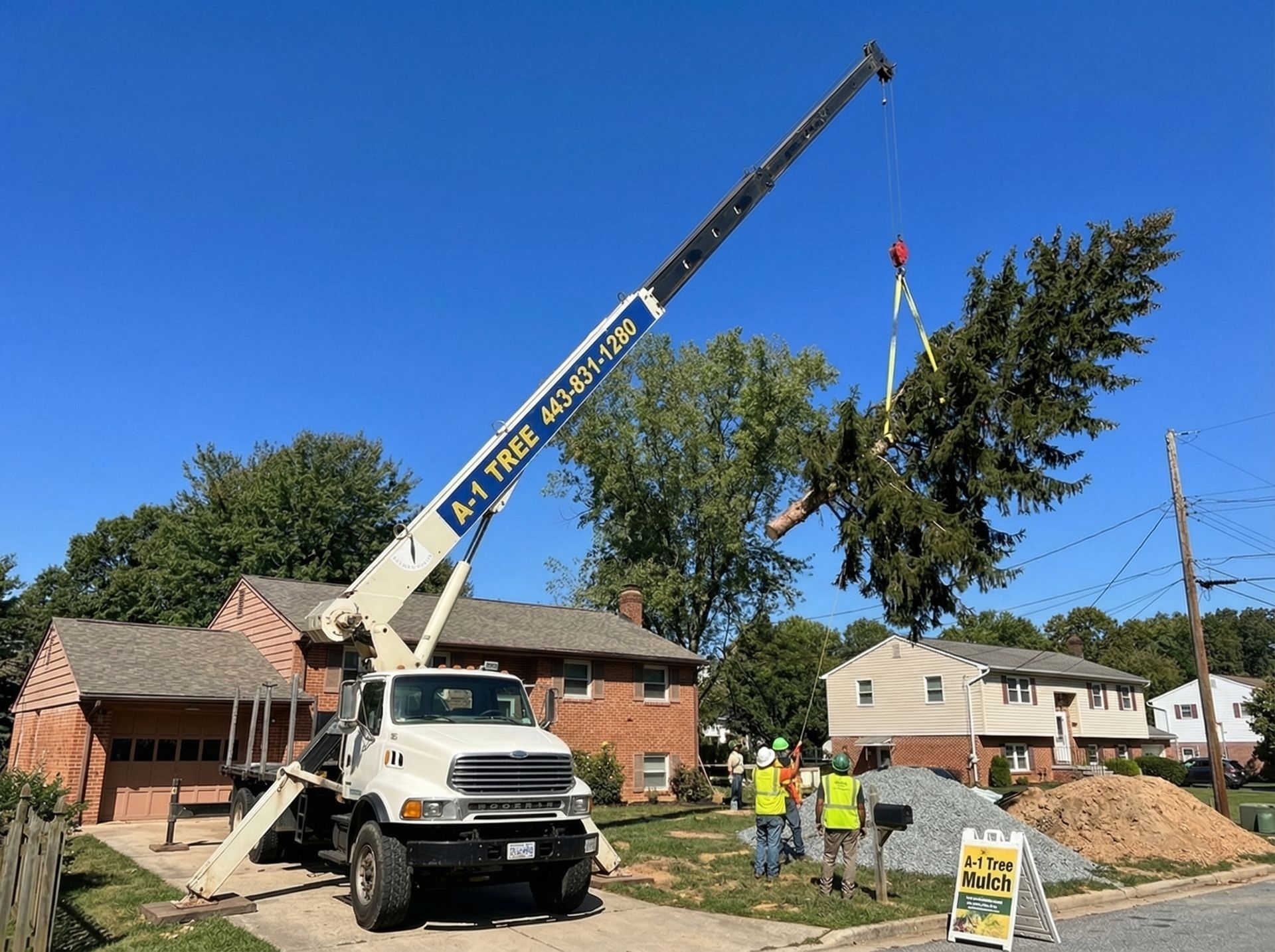
Depending on the job, A-1 stages the crane, bucket truck, or both. This is where owning the equipment matters — there’s no waiting on a rental yard to free up a crane the morning after a storm when every crew in the county is making the same call. The crew sets up ground protection if needed to avoid tearing up the lawn or driveway with heavy equipment.
3. Sectional removal, working from the top down or the tip in.
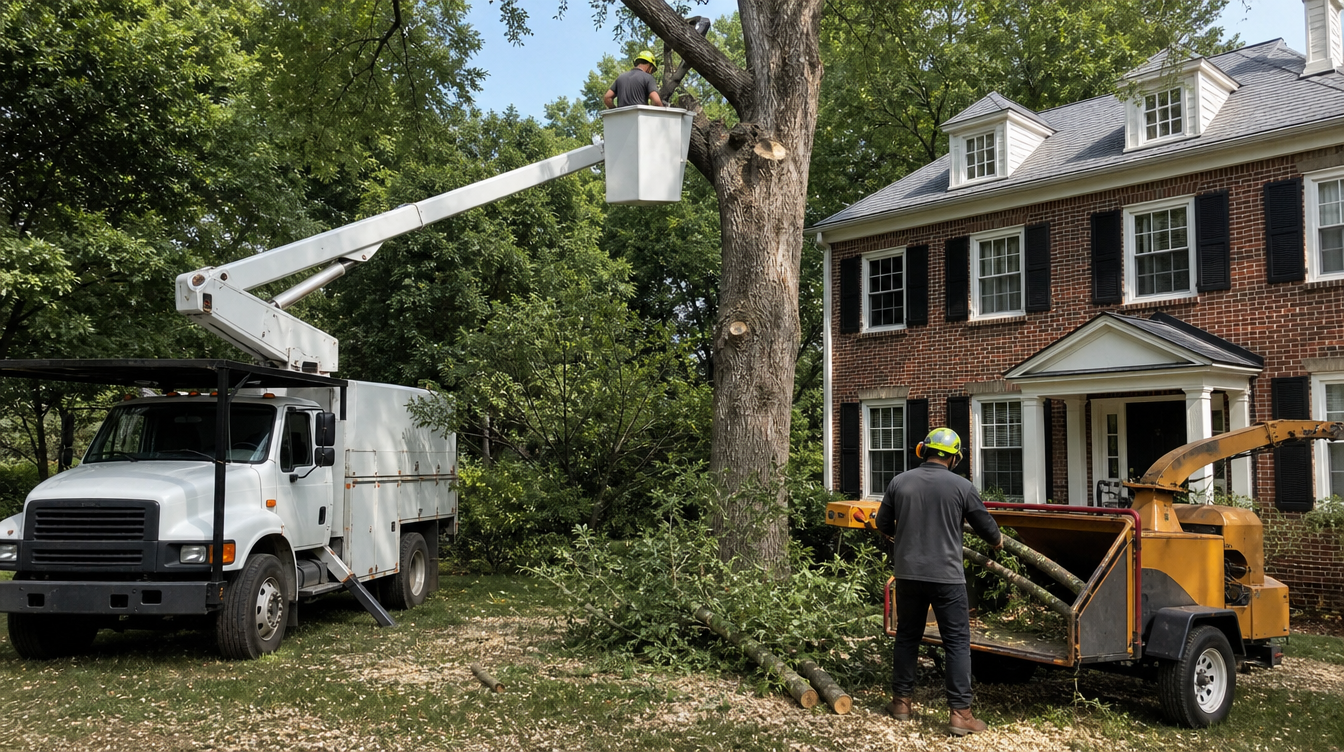
Storm-damaged trees rarely fall clean. The crew cuts in sections — removing the tip and smaller limbs first to relieve weight and tension before addressing the trunk. On jobs where the tree is against a structure, the crane lifts sections free rather than letting them drop. Controlled removal prevents what would otherwise be a second impact on an already damaged roof or fence.
4. Chipping and debris clearing.
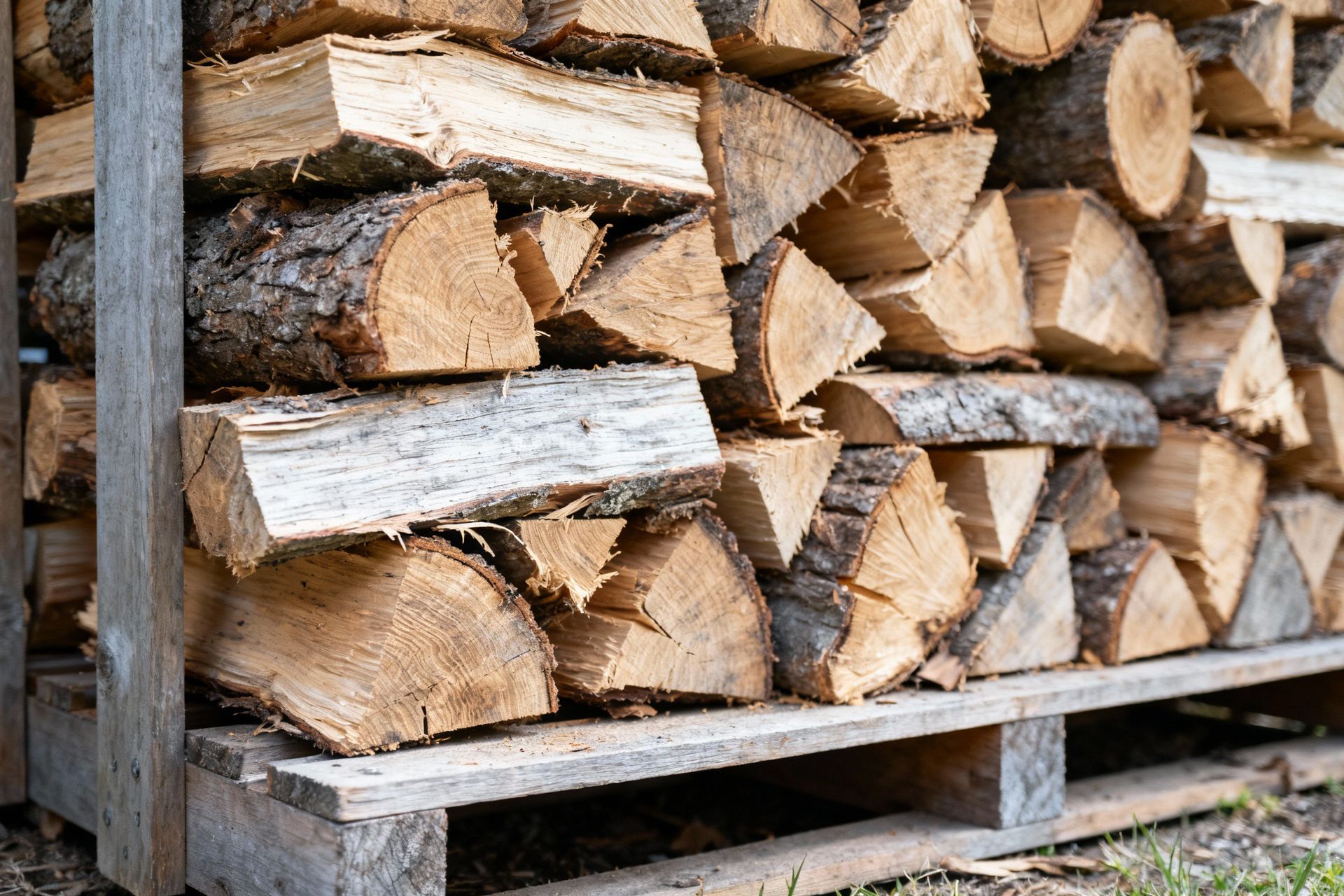
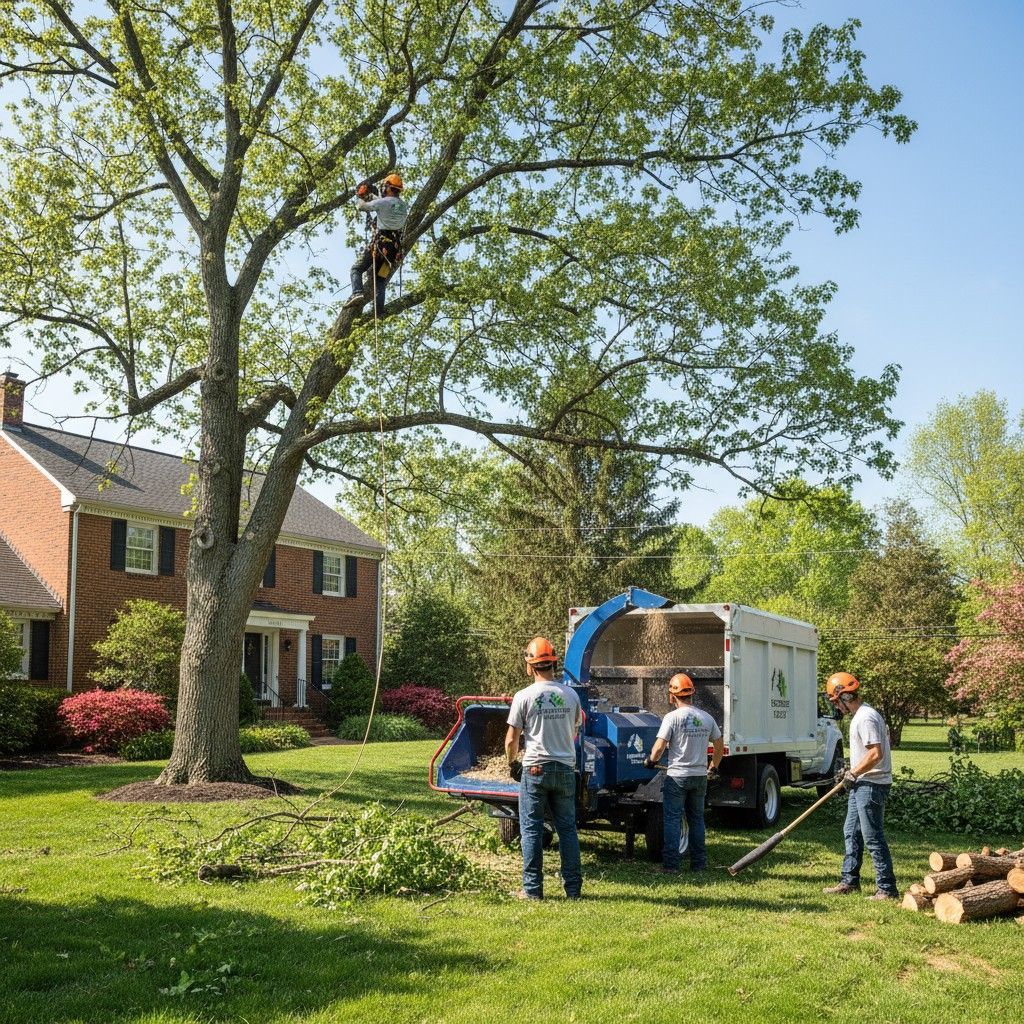
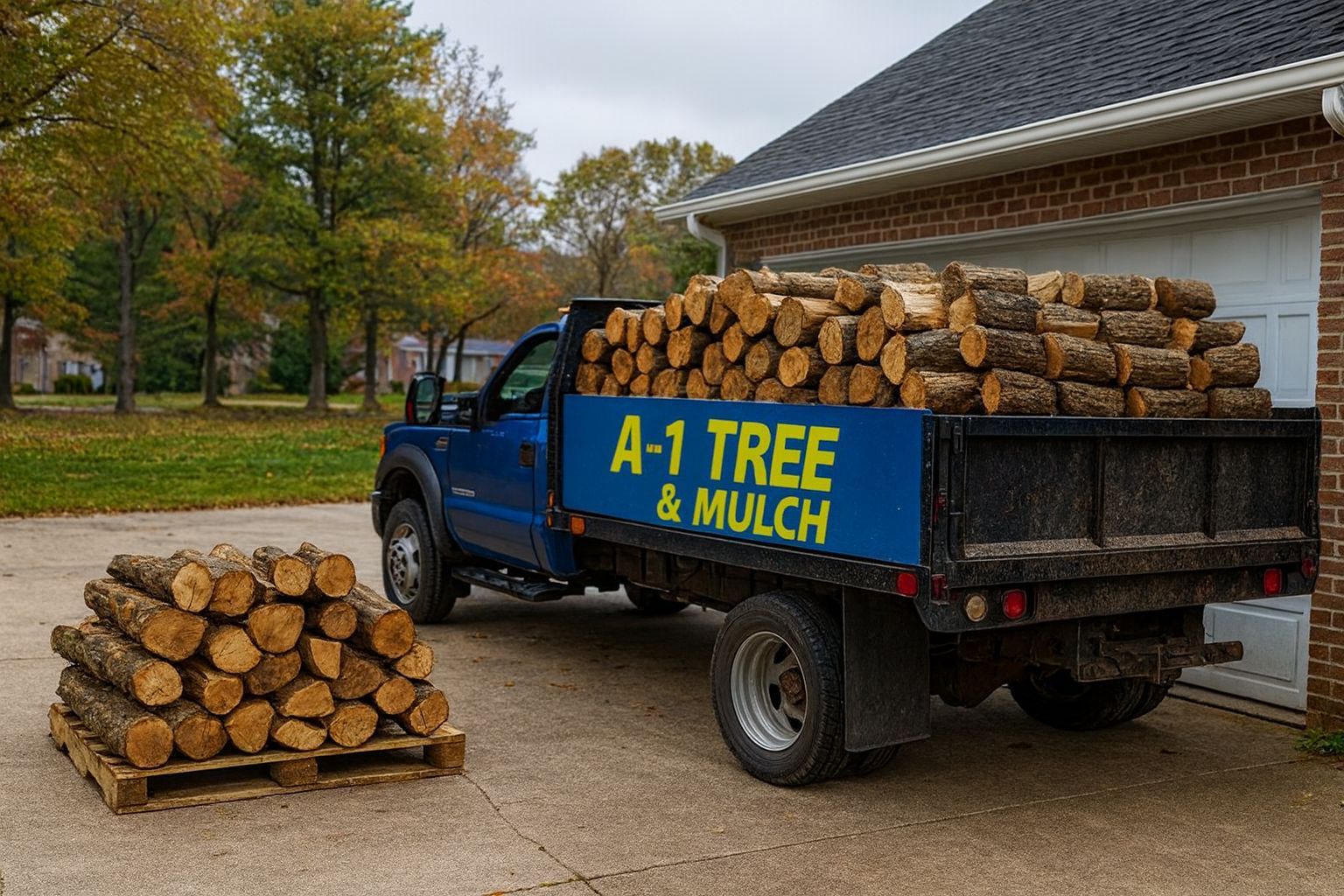
Branches and smaller material go through the chipper on-site. Larger trunk sections are cut to length and removed or, if the homeowner wants firewood, cut to cord length and stacked. A-1’s closed-loop model means nothing goes to waste — wood removed from your yard typically becomes the firewood and mulch A-1 sells. The job ends with the site clean: debris gone, no piles left behind.
5. Stump decision.
Storm jobs sometimes leave a stump in the ground, sometimes don’t — it depends on how the tree came down and how much of the root system came with it. If a stump remains, grinding it out is a separate service. Confirm at booking whether stump grinding is included in the scope or quoted separately.
How Quickly Can a Baltimore Tree Service Respond After a Storm?
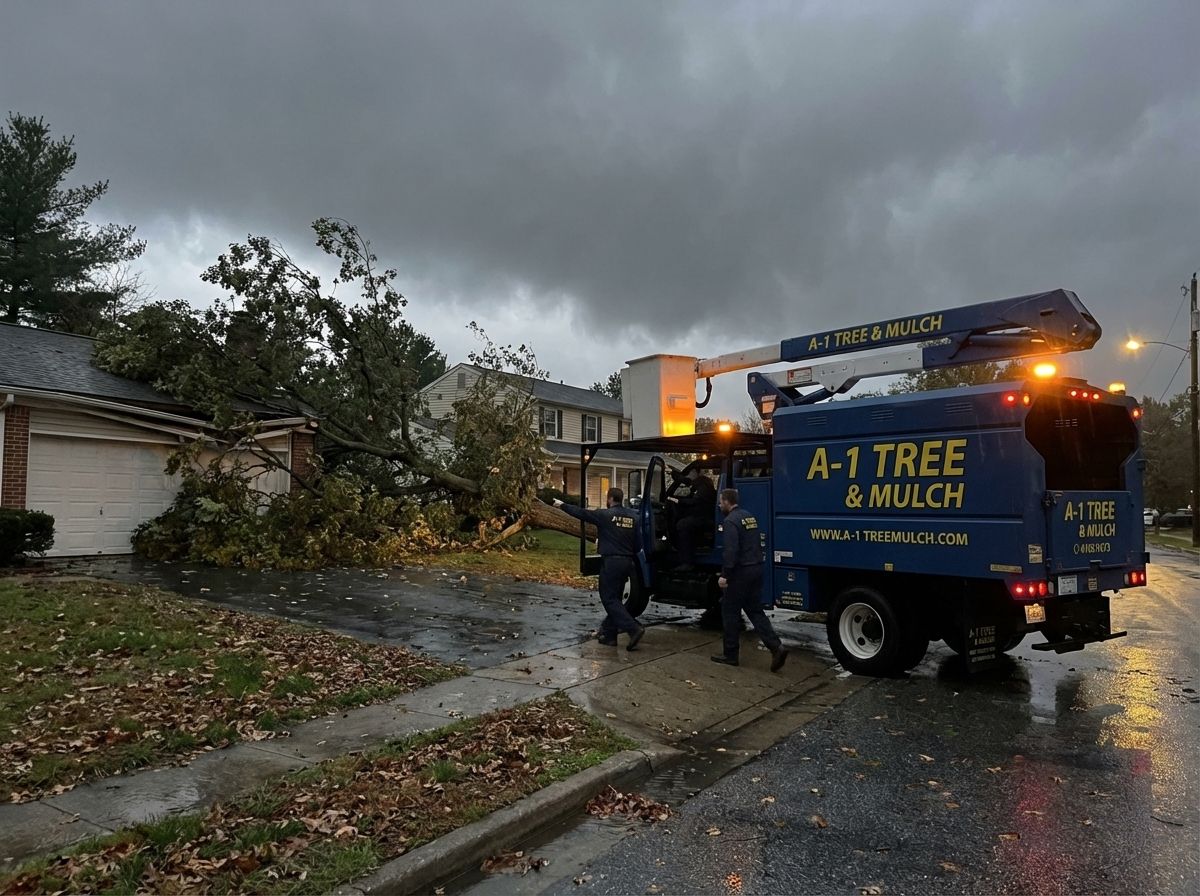
Response time after a major storm event depends on two things: the severity of the storm and the equipment the company actually owns.
Baltimore County sees its worst tree events during nor'easters in late winter and early spring, summer thunderstorms, and occasionally the remnants of a tropical system in August or September. After a significant storm, a well-equipped local tree service will have a queue — that's unavoidable. What separates crews that can work through that queue from those that can't is equipment ownership.
A-1 Tree & Mulch owns its crane, bucket truck, and chippers outright. No rentals, no equipment scheduling coordination with a third party. When conditions allow, that means faster mobilization and the ability to handle complex removal situations — tight access, trees on structures, large-diameter trunks — that require specialized gear. A crew with a chainsaw and a pickup truck can handle a brush pile. A tree on a roof requires different capacity.
A-1 has served suburban Baltimore since 1988 — Towson, Cockeysville, Hunt Valley, Parkville, Timonium, Monkton, Phoenix, Rosedale. The local knowledge matters. A crew that works these neighborhoods every week knows the site conditions, understands which areas flood first, and can estimate access challenges before they pull up to the driveway.
Maryland state law requires a Licensed Tree Expert (LTE) credential for all paid tree work. A-1 holds
Maryland LTE #552. Not every company operating in Baltimore County holds this license — it's worth verifying before signing any contract. The Maryland DNR maintains the list of licensed practitioners at
dnr.maryland.gov.
Storm-Proofing Your Property Before the Next One
The best storm damage conversation is the one you have before a tree comes down. Baltimore's spring storm season runs from roughly March through June, with another active window in late summer. The trees most likely to fail are:
- Dead or visibly declining trees — brittle wood, no leaf production, fungal growth at the base
- Trees with significant deadwood in the canopy — branches that will break before the whole tree moves
- Trees with a strong lean toward a structure, especially if the lean has increased over time
- Trees that lost major limbs in a previous storm without a follow-up inspection and corrective pruning
- Large trees immediately adjacent to the house where root systems may have been disturbed by construction or pavement
A licensed tree inspection before storm season is the lowest-cost version of this problem. A-1 can assess your property, identify high-risk trees, and recommend corrective pruning or removal before a storm makes the decision for you. The estimate is free.
One note on permits: in Baltimore County, removing a tree on private property generally does not require a permit. Street trees and public right-of-way trees are a different matter — those require approval from Baltimore County's Department of Public Works before any work begins. A-1's LTE license covers permitted work as well as standard private-property removal.